Planning a trip to Addo Elephant National Park? Here is everything you need to know before you go.
From entry fees and how to get there, to where to stay and how to fit Addo into your South Africa itinerary, this guide covers it all. You’ll also find a suggested 2-day itinerary to make the best of your time.
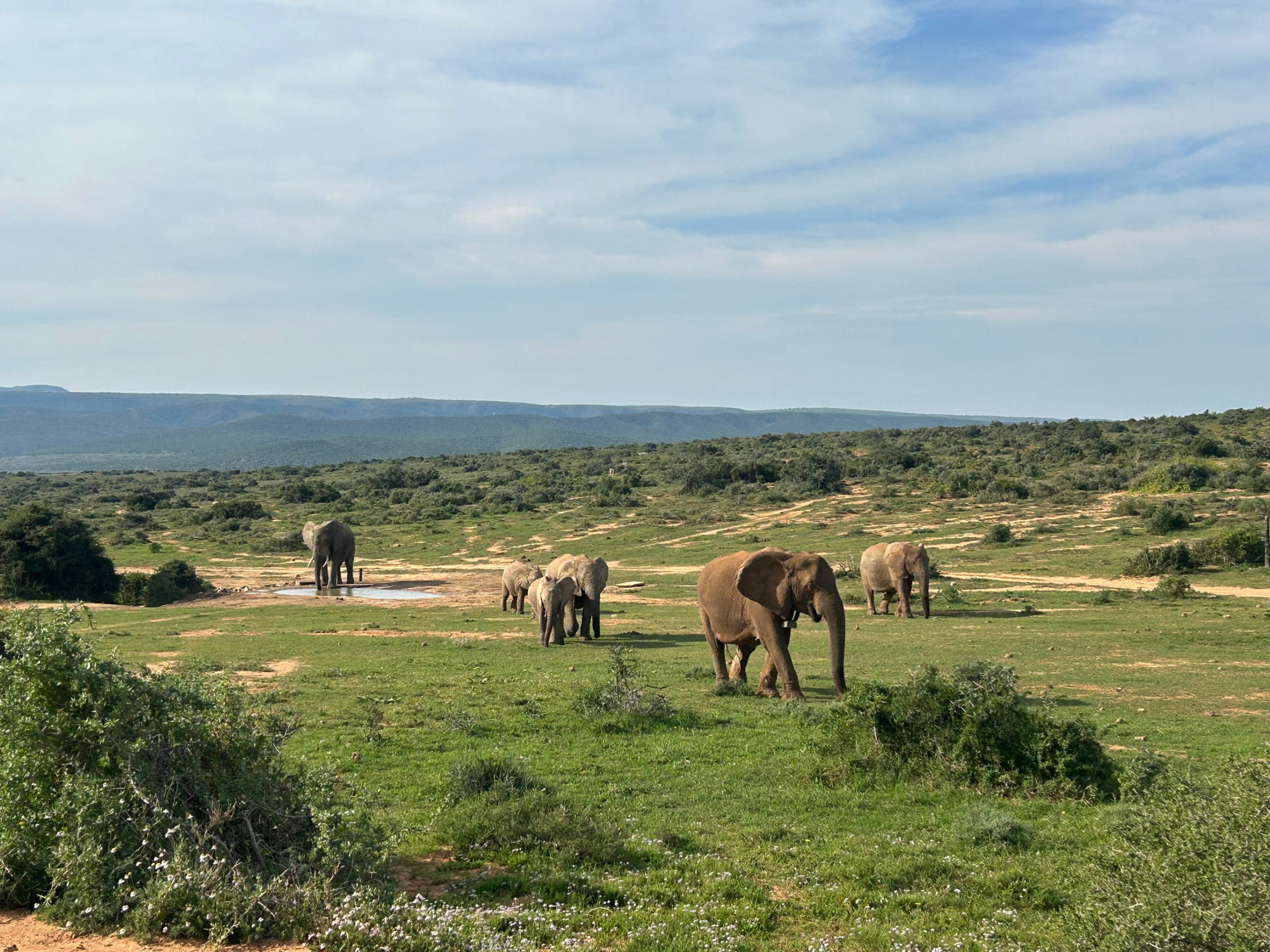
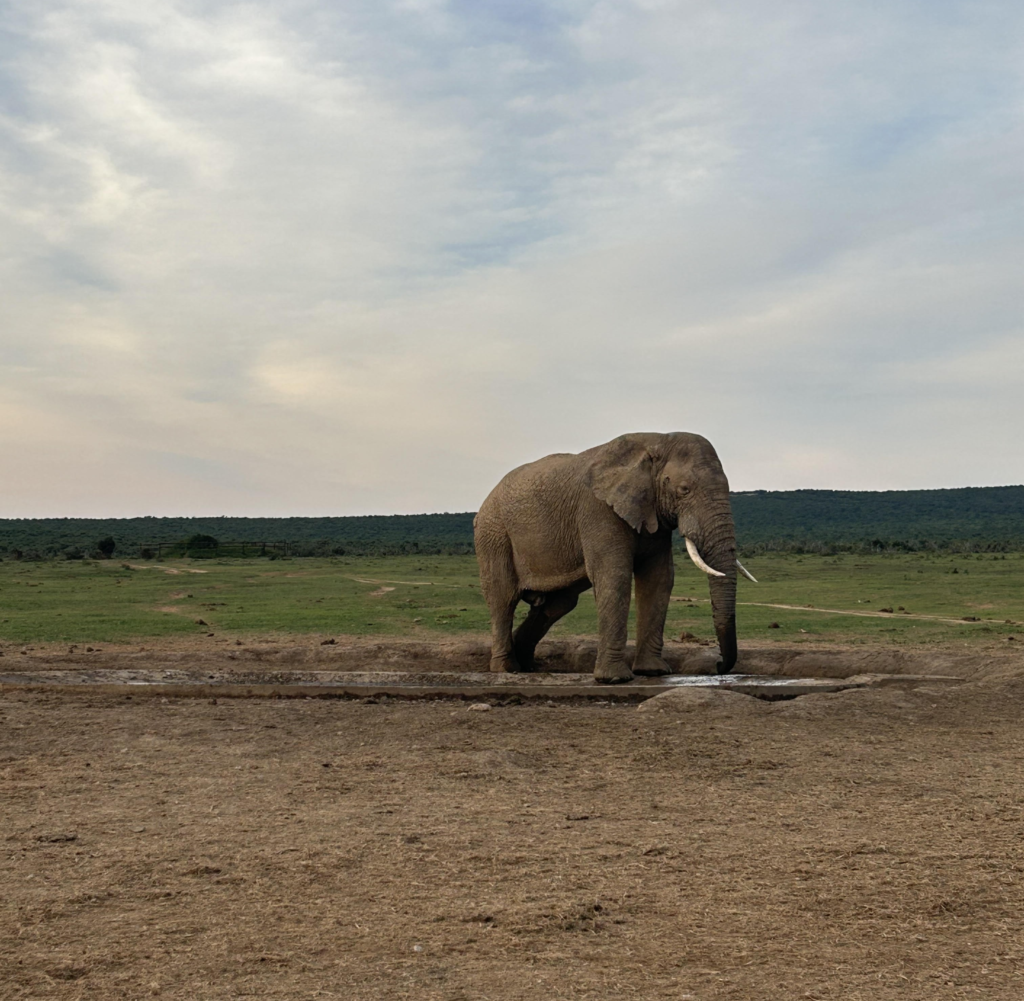
Addo Elephant National Park is the third-largest national park in South Africa. It is the only park home to the Big 7: the Big 5 (lion, leopard, rhino, elephant and buffalo) plus the southern right whale and great white shark. Addo has a population of over 800 elephants, most of which can be found in the park’s northern game-viewing section.
I spent almost 6 weeks in South Africa and my visit to Addo Elephant Park was the highlight of my entire trip.
I visited Cape Town, Kruger National Park, St Lucia, Hluhluwe-iMfolozi game reserve and the Garden Route, however, visiting Addo remains my absolute favourite.
Addo Elephant National Park occupies a diverse landscape from the Alexandria Dune Fields on the southern coast, to the mountainous 4×4 only sections in the Kabouga sections of the park.
This guide will focus on visiting the main game viewing area of the park, where most visitors go for classic wildlife sightings.
Here is everything you need to known about visiting Addo Elephant National Park for the first time.
How to Get to Addo Elephant National Park
Addo Elephant Park can be accessed through two gates – the Main Gate in the north and the Matyholweni Gate in the south.
The Matyholweni Gate is closest to Port Elizabeth (Gqeberha). Just 30 minutes from the city and 40 minutes from the airport.
For most visitors, especially those arriving from the Garden Route, the Main Gate is the best place to enter the park. This is where you will find the highest concentration of elephants, the easiest roads to drive, and the Main Rest Camp which has the park’s main facilities including a shop, restaurant, and fuel station.
If entering via the Matyholweni Gate, keep in mind that most of the roads in this section of the park are mostly unpaved. You don’t need a 4×4 for the main game viewing area, but do factor in extra time.
It is recommended that guests travelling from Port Elizabeth (Gqeberha) avoid the section of the R335 near Motherwell due to safety concerns. You can find a map of recommended routes here.
At the end of this guide you will find a recommended 2-day Addo itinerary that maximises your time in the park by entering through the Main Gate and leaving from the Matyholweni Gate.
Entry Fees at Addo Elephant National Park
Addo Elephant National Park is managed by South African National Parks (SANParks) and visitors are charged a daily conservation fee upon entry.
Fees differ depending on your nationality, with higher rates for international visitors compared to South African citizens & residents, and SADC nationals. Rates are reduced for children aged 2 to 11 years.
A visit to Addo Elephant Park will cost an international visitor R 492 (approx. 29 USD or 22 GBP) per day. Entry fees are charged per day, therefore overnight visitors will need to pay for every day spent in the park. You can check the SANParks website for a full list of daily conservation fees for visitors from 1 November 2025 to 31 October 2026.
If you’re planning on spending a lot of time in national parks during your trip, it might be worth purchasing a Wild Card. This gives visitors 365 days of unlimited access to South Africa’s National Parks. And although it is unlikely you will be spending that much time in the country, a Wild Card can pay for itself by just spending one week at Kruger National Park. I saved almost 300 USD by purchasing a Wild Card for my trip.
You can read my post “Is the SANParks Wild Card Worth It?” to see if it will save you money here.
Where to Stay at Addo Elephant National Park
When visiting Addo Elephant National Park, you can choose to stay inside the park or outside the gates in nearby lodges and guesthouses.
Rest Camps
Addo Main Rest Camp
The Addo Rest Camp, known as the Main Camp is the largest and most convenient place to stay. It offers a wide range of accommodation, including guesthouses, chalets, cottages, cabins, rondavels and safari tents. There is also a caravan and tent site.
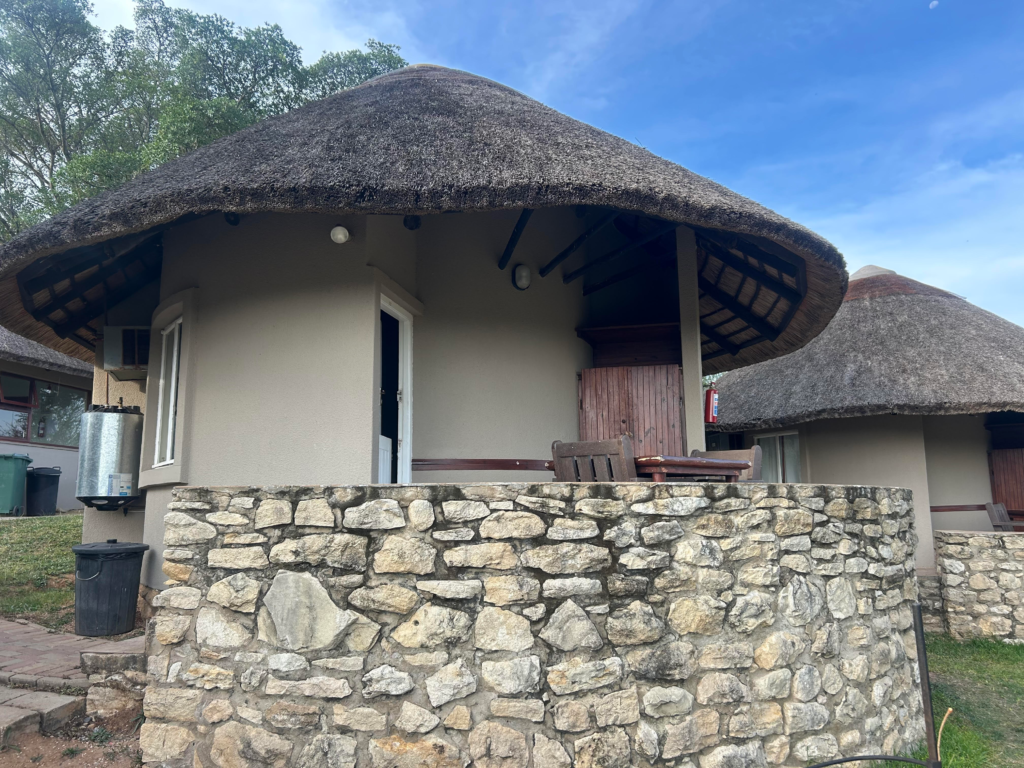
I stayed in a rondavel in the Addo Main Camp. The rooms are basic, but reasonably priced. Each unit has its own braai area, and there is also access to a shared kitchen.
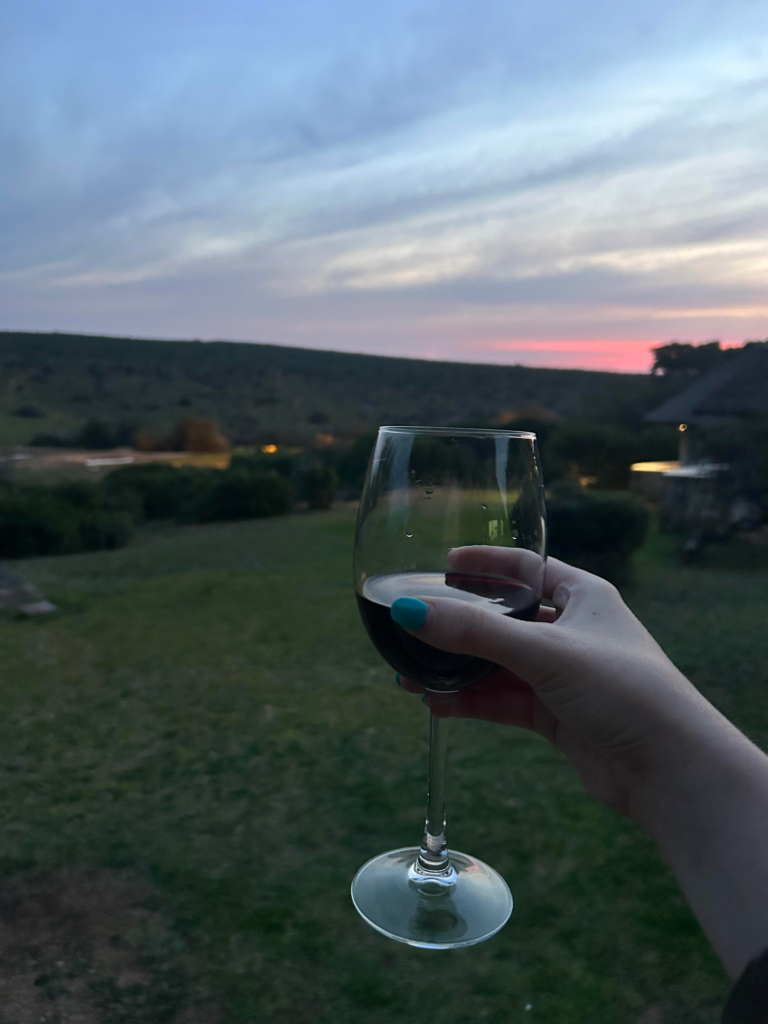
One of my favourite moments of the entire trip happened here, sitting outside with a glass of wine, looking out over the park, when an elephant walked past. It wasn’t particularly close but seeing a wild elephant from your room is an incredible experience in my opinion.
Matyholweni Rest Camp
Located in the southern section of Addo is the Matyholweni Rest Camp, offering simple accommodation only. You’ll need to stock up on supplies such as fuel and food outside the gate in the nearby town of Colchester.
I haven’t stayed here myself, however after reading the Google reviews mentioning flying bats in the rooms and huge spiders, I’m good not trying it.
Nyathi Rest Camp
Nyathi, located only a 30-minute drive from the Main Camp, is the park’s newest camp. It offers a small number of luxury cottages with splash pools. The camp is quiet and isolated in a beautiful setting. It does not have the same amenities as the Main Camp so come prepared.
Accommodation within the Rest Camps can be booked on the SANParks website, try to book in advance as accommodation can sell out weeks in advance, especially in high season.
Luxury Lodges
Alternatively, you could try a luxury lodge, Gorah Elephant Camp and RiverBend Lodge are private accommodations within the park area. I can’t comment as these are way out of my price range, however I did say this was going to be an “ultimate” guide and therefore they are included.
Staying Outside of the Park
There are numerous places to stay outside the park, and this can be convenient for various reasons, whether you are on your way to Addo, accommodation is in the rest camps has sold out, or you’re simply trying to save money.
I stayed outside the park the night before going to Addo. The area surrounding the Main Gate features a lot of citrus farms. I stayed at Gerald’s Gift Guesthouse, and the grounds were lovely, I really enjoyed walking through the citrus groves at sunset before eating dinner at the on-site dining room.
I would recommend staying within the park itself, however staying outside can be useful when travelling to and from.
Amenities at Addo Main Camp
Visitors must exit the park, or return to their rest camp, before the official gate closing times. This is one of the main reasons I recommend staying inside the park. The Main Camp offers several amenities that help you maximise your time and make your experience even more memorable.
Underground Hide
The underground hide located in the Main Camp overlooks a watering hole. It is accessible to both day visitors and overnight guests, however the reason I like it so much is because it allows you to (hopefully) view elephants outside of the standard park opening hours.
Interpretive Centre
Next to the hide is the interpretive centre, a small exhibition space with information about the park’s history, landscapes and wildlife. It’s open late at night so it’s worth a visit once you’ve left the main game viewing area for the day.
Park Shop
The Camp’s shop sells a variety of souvenirs, snack, basic groceries, braai supplies and alcohol. Most units come with their own braai (traditional South African barbecue), so you can enjoy dinner outside overlooking the park.
Cattle Baron Restaurant
If you’d rather dine out, the Cattle Baron Restaurant is an option. It’s perfect for breakfast before a full day of game viewing, or a relaxed dinner after a long day in the park. I particularly enjoyed the chicken schnitzel.
Swimming Pool
The Main Camp has a swimming pool which is great for cooling off on a hot day. This is only accessible to overnight guests.
Fuel Station
There is a fuel pump located within the camp which is very convenient considering the sizes of Addo and the distances you’ll cover.
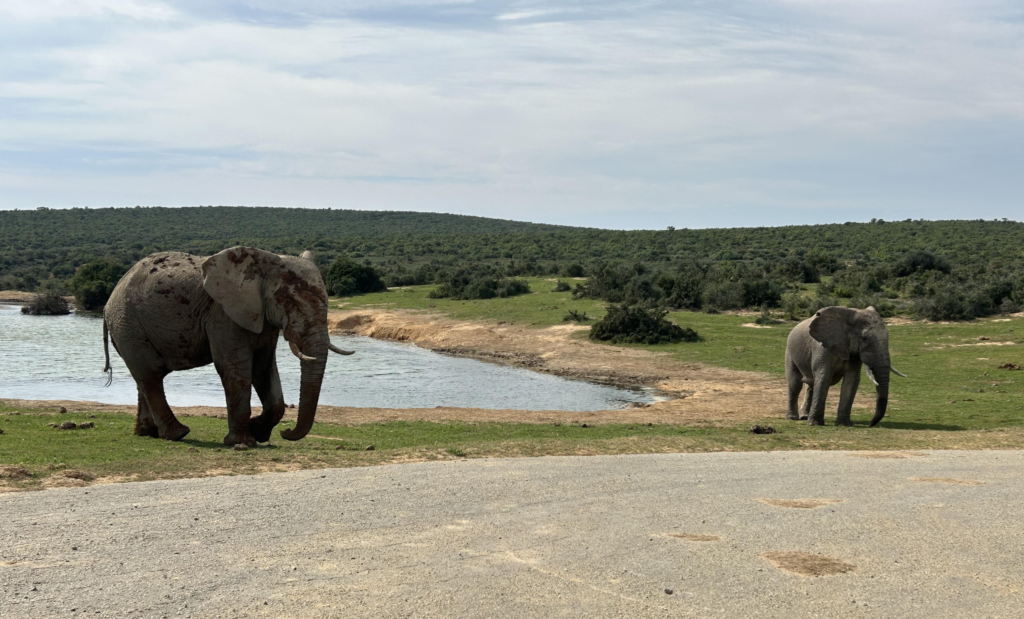
Self-Drive vs Guided Game Drives
When visiting Addo Elephant National Park, you can explore the park on a self-drive safari, a guided game drive, or a combination of both. The choice is entirely dependent on your preference, budget and confidence to navigate the park.
Self Drive
Addo Elephant National Park is one of the best places in South Africa for a self-drive safari. The roads are well signposted, you’ll receive a clear map on arrival, and the layout of the main game viewing area is simple to navigate.
Many of the roads near the Main Camp are paved. The rest are unpaved but generally in good condition. A 4×4 is not required within this section of the park.
One of the biggest advantages of self-driving is the freedom it gives you. You can decide where to go, spend as long as you like at sightings, and if you’re lucky have them all to yourself.
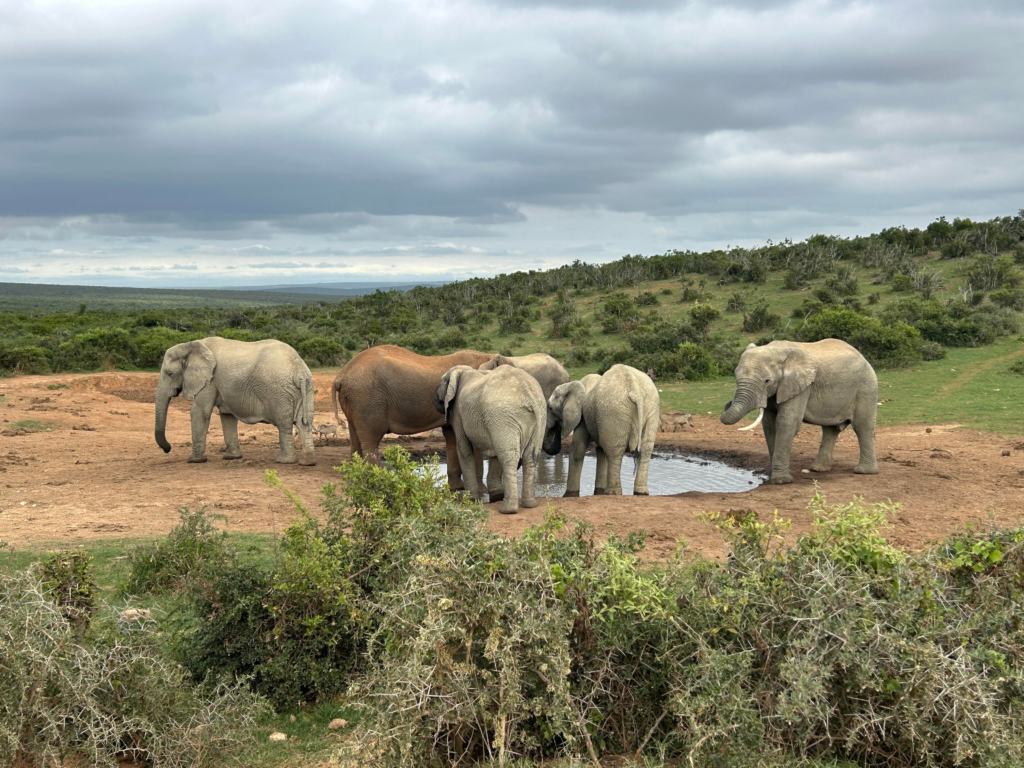
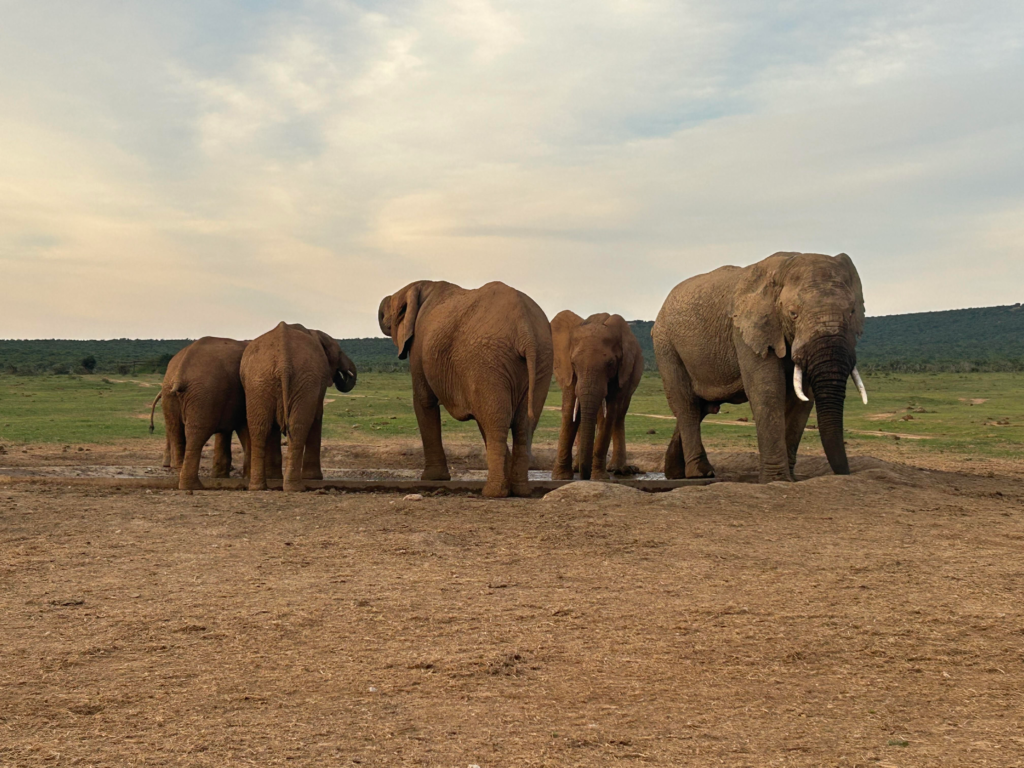
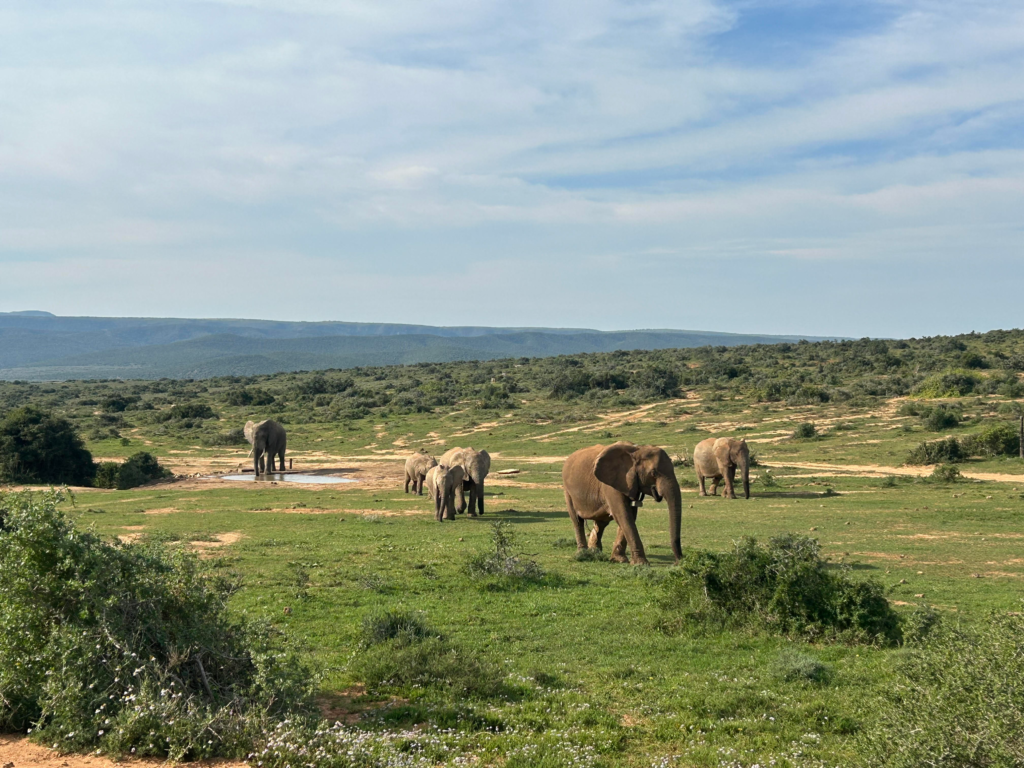
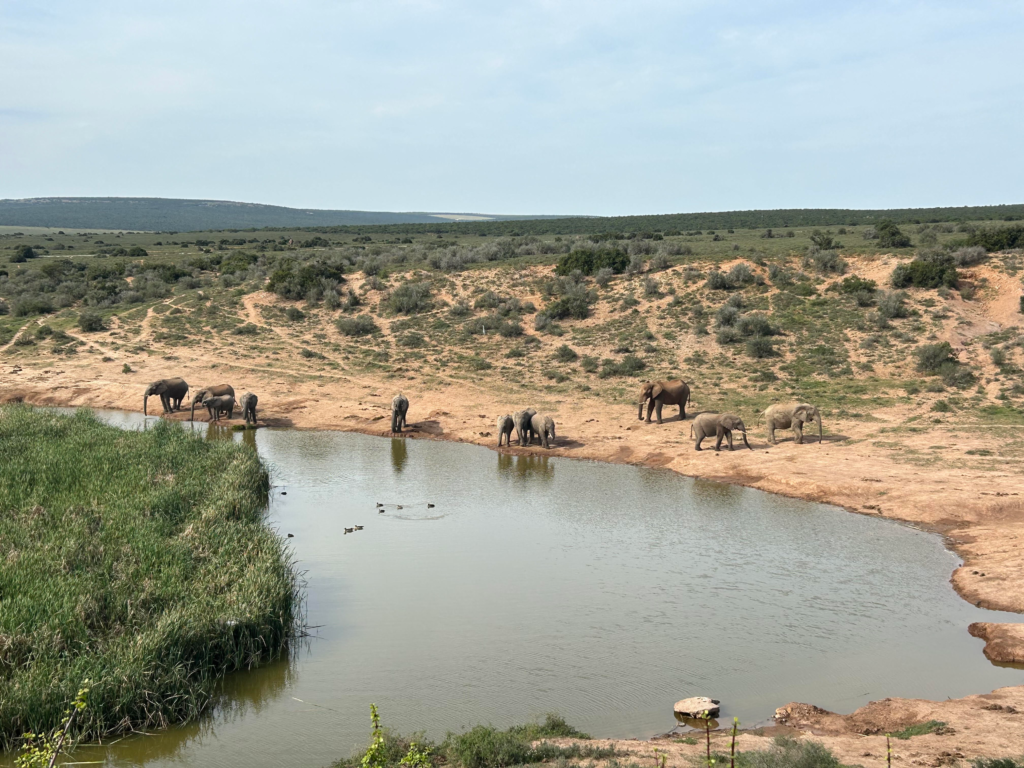
When I visited, I watched a herd of elephants at a watering hole without another car in sight. No cars fighting for the best spot, no pressure to move on and no commotion.
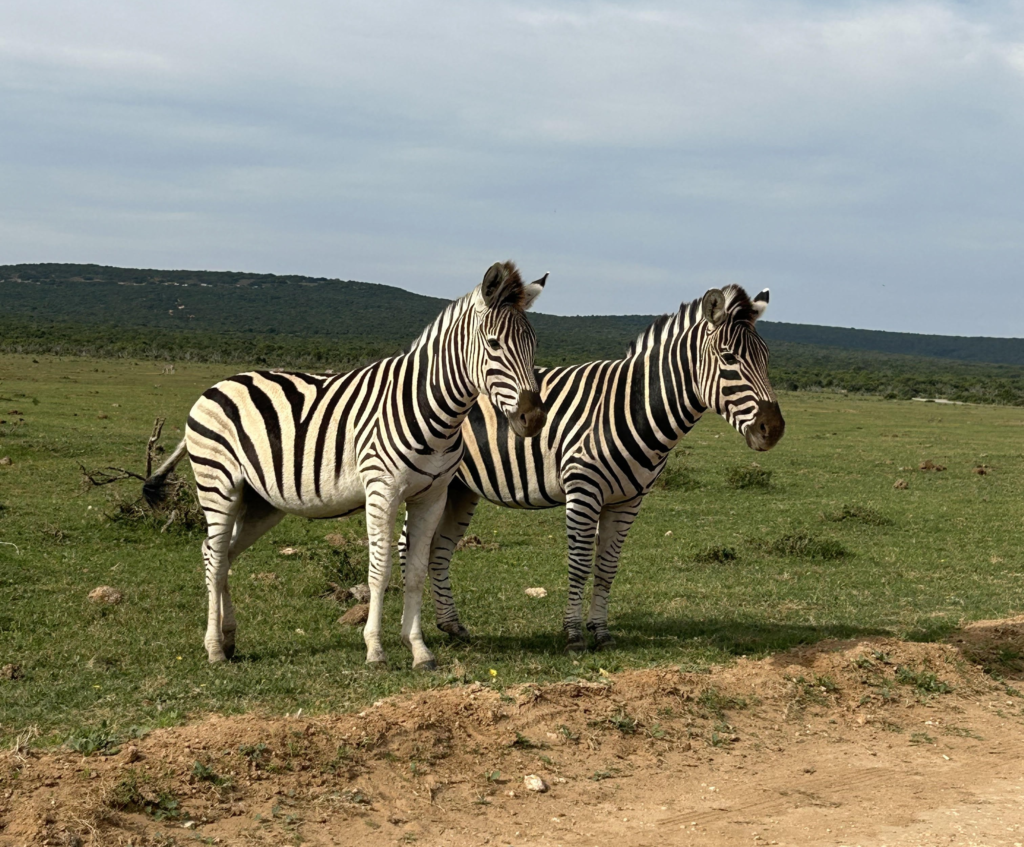
Most people visit Addo to see elephants, and fortunately they’re relatively easy to spot thanks to their size and comfort around vehicles. If you decide not to splurge on a guided game drive, you will still have a fantastic and rewarding experience.
Guided Game Drives
Addo offers a number of guided game drives throughout the day, which can be booked online or at the Main Camp’s reception.
Guided game drives are a great option if you want a professional guide with knowledge of recent sightings within the park. It’s also a beneficial way to learn about the park and it’s wildlife.
Game drives available at sunrise, during the day, sunset and at night. If you’re going to do a game drive, I would suggest choosing either a sunrise, sunset or night option.
Wildlife in the park is most active during dawn and dusk, when temperatures are cooler. Taking a guided game drive during these hours should hopefully increase your chances of seeing big cats and other predators. Depending on the time of year, the sunrise option also allows you to enter the park 30 minutes before the official gate opening time.
Night tours allow you to be in the park after closing time, this offers you a unique experience that wouldn’t be possible without a guided tour. Additionally, it gives you the opportunity to see nocturnal animals that would be otherwise sleeping during the day.
Wildlife at Addo Elephant National Park
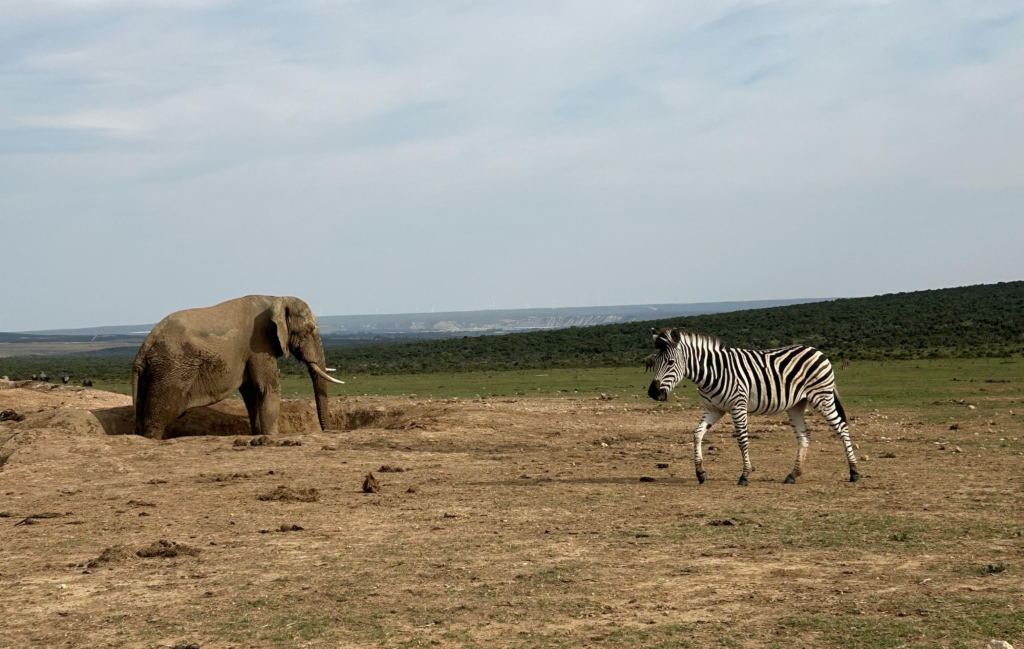
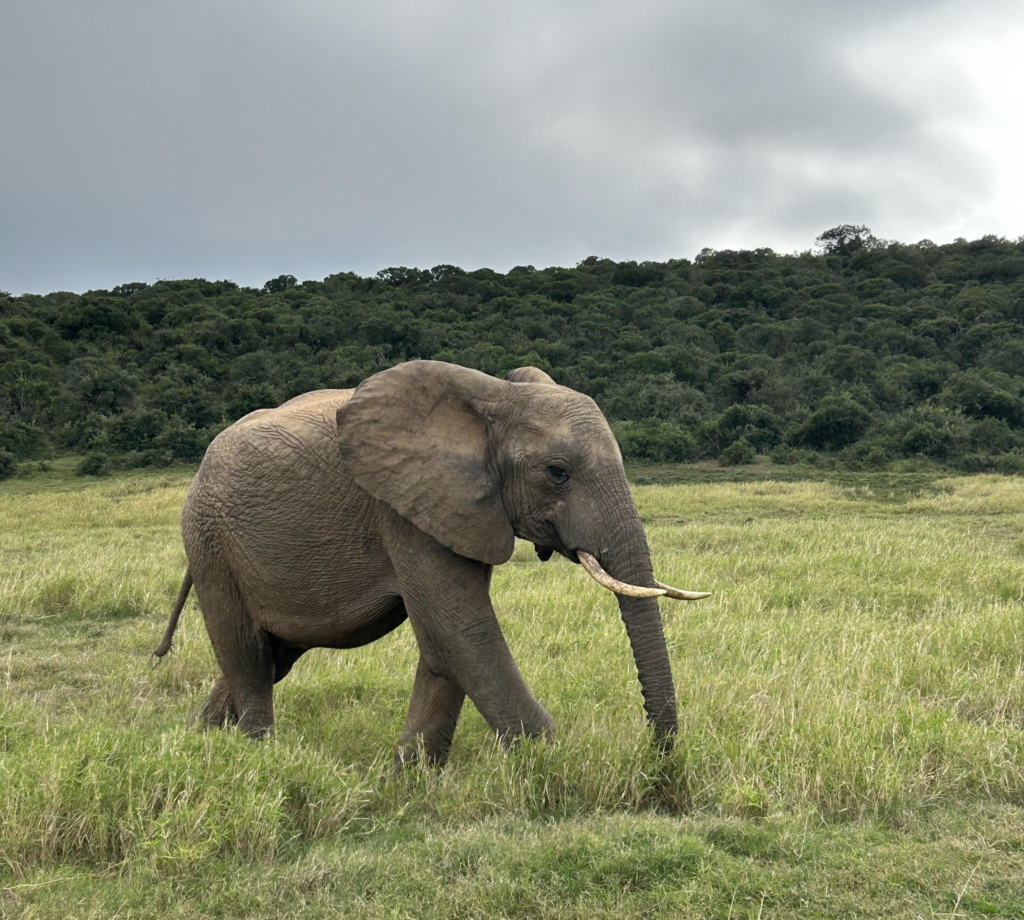
The main draw of Addo is it’s population of African elephants, most of which are found in the northern section of the park around the Main Camp area.
Lions were reintroduced in Addo in 2003. Although the population size is small, they are most often seen around sunrise and sunset. Leopards are rarely seen in the park and tend to be founded in the extended areas of Addo.
Spotted hyenas can also be seen, particularly on night drives. You may even hear them from the Main Camp, and if you’re lucky spot one from the underground hide.
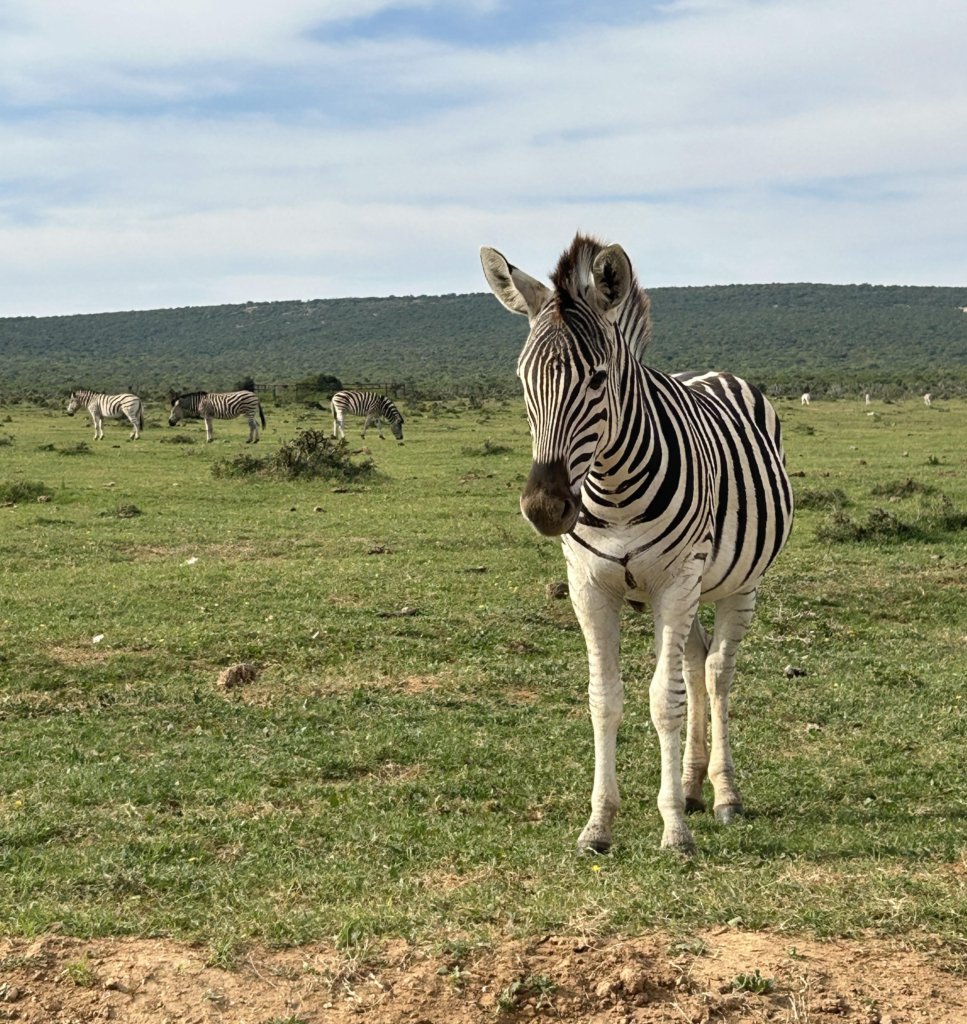
There is a herd of around 400 Cape buffalo, a healthy population of zebra and several antelope species.
I was really lucky to spot a caracal, a rarely seen wild cat, in a quiet section of the park.
The park is also home to the flightless dung beetle, which has right of way on the roads. You’ll notice signs throughout the park reminding visitors not to drive over elephant dung. These beetles play an important role in the recycling of nutrients and helping vegetation regrow in the park.
You will find an animal sightings game on the back of your park map, this can make a fun game to play in the car during self-drive safaris.
How to Fit Addo Elephant National Park into your South Africa Trip
Addo Elephant National Park was the number one highlight of my trip to South Africa, and I would highly recommend a visit.
Planning your trip can be overwhelming as the country is so huge and destinations are spread so far apart. Here are a few suggestions on how you can slot a visit to Addo into your trip itinerary.
After the Garden Route (Most Popular)
The easiest way to visit Addo is to add it to the end of your Garden Route road trip. Storm’s River, the official endpoint of the Garden Route is around 3.5 hours from Addo. From there, you can continue to the park and then drive directly to Port Elizabeth (Gqeberha), which is only a 30-minute drive from Addo’s southern gate.
My Personal Route
I flew into Cape Town and spent a week there, drove to Betty’s Bay, Hermanus and Cape Agulhas, before starting my Garden Route road trip in Mossel Bay. After finishing the Garden Route, I spent some time in Jeffrey’s Bay which is around 2 hours from Addo. I spent the night before visiting the park at a guesthouse a short drive away from the Main Gate. I spent one night within the park at the Main Camp, before driving directly to the airport in Port Elizabeth from the park.
You can read my Ultimate 3-Week South Africa Itinerary here.
Starting in Port Elizabeth (Gqeberha)
You could do this route in reverse, starting in Port Elizabeth, visiting Addo first, driving the Garden Route and ending in Cape Town.
Short on Time
If you’re short on time, you could fly directly into Port Elizabeth airport from Johannesburg, visit the park and then fly back. Airlines such as Airlink, FlySafair and South African Airways operate multiple cheap daily flights. The flight time is around 1 hour and 30 minutes.
Recommended Addo 2-Day Itinerary
This is a 2-day, 1-night Addo itinerary designed to slot easily into your trip. It is based around you arriving from the Garden Route and continuing on to Port Elizabeth (Gqeberha). You can customise it depending on your travel plans.
From Storm’s River. its around 3 hours to Addo Elephant National Park. If you decide to visit the worthwhile surf town of Jeffrey’s Bay, the drive drops to around 2 hours.
The night before you could stay at one of the many nearby guesthouses and lodges so that you can enter the park early the next morning.
Day 1 – Main Gate (North) to Main Camp
Enter Addo through the northern Main Gate, it’s a short drive to the Main Camp.
Spend the night at the Addo Main Camp which has the most facilities. The highest wildlife density can be found around here.
Animals are most active at dawn and dusk, so arriving when the gates open increases your chances of spotting predators. If you’re mostly here for the elephants, they’re active throughout the day, so you can arrive slightly later.
Before you begin your drive, check the sightings board in the Main Camp. This will show you where wildlife has recently been spotted. Then use your park map to plan your route and begin your self-drive safari.
You can spend the full day exploring the park independently. If you wish, you could add on a guided game drive. I would suggest doing a sunset or night drive, alternatively you could do a sunrise drive the following morning.
Don’t forget to check-in to your accommodation before reception closes, you can usually get access to your room from 2pm.
In the evening, enjoy dinner at the Cattle Baron restaurant. Or, have a braai at your accommodation.
Don’t forget to visit the underground hide, you may spot some wildlife from the camp area.
Day 2 – Main Camp to Matyholweni Gate (South)
On the second day, exit the park through the southern Matyholweni Gate. The drive from the Main Camp to this gate takes around 2 hours, not counting wildlife stops. Keep in mind roads in this section of the park are unpaved also.
Although the southern section of the park has a lower wildlife density, exiting this way allows you to explore a less visited area of the park that you probably wouldn’t have seen otherwise.
Once you exit the park you can continue on to Port Elizabeth (Gqeberha) or the airport.
Tips for Visiting Addo Elephant National Park
Check the Sightings Board
Before starting your drive, check the sightings board at the Main Camp. It shows where wildlife has recently been spotted, plan your route according to that.
Main Gate (North) vs Matyholweni Gate (South)
There is a higher density of animals around the Main Camp area which is why most visitors choose to explore this section. The southern Matyholweni area is quieter as wildlife is more spread out.
Focus on Watering Holes
Watering holes are one of the best places to find wildlife, especially during warmer weather. Note that certain watering holes in the southern section of the park are blocked off for elephants.
Sunrise & Sunset
Wildlife is most active during sunrise and sunset when the temperatures are cooler. This is prime time for spotting predators such as lions and hyenas.
Bring Binoculars
Sometimes wildlife can be quite far away and binoculars will make a huge difference to your experience.
Be Quiet
Turn your car engine off and keep quiet. Loud noises and talking can scare off animals.
Bring Snacks & Water
You’ll be spending hours in the car, so bring plenty of drinks and snacks. Your day won’t be as enjoyable if you’re dehydrated and hungry.
Toilets
Don’t forget to use the toilet before entering the main game viewing area. Exiting the car in the park is not allowed. You can find toilets inside the park at Jack’s Picnic Site.
Final Thoughts on Addo Elephant National Park
I have travelled extensively to over 60 countries and visiting Addo is one of the best travel experiences I’ve ever had.
I’ve explored Kruger National Park and Hluhluwe-iMfolozi Game Reserve, watched hippos in St Lucia and gone whale-watching in Hermanus, however Addo was my absolute favourite.
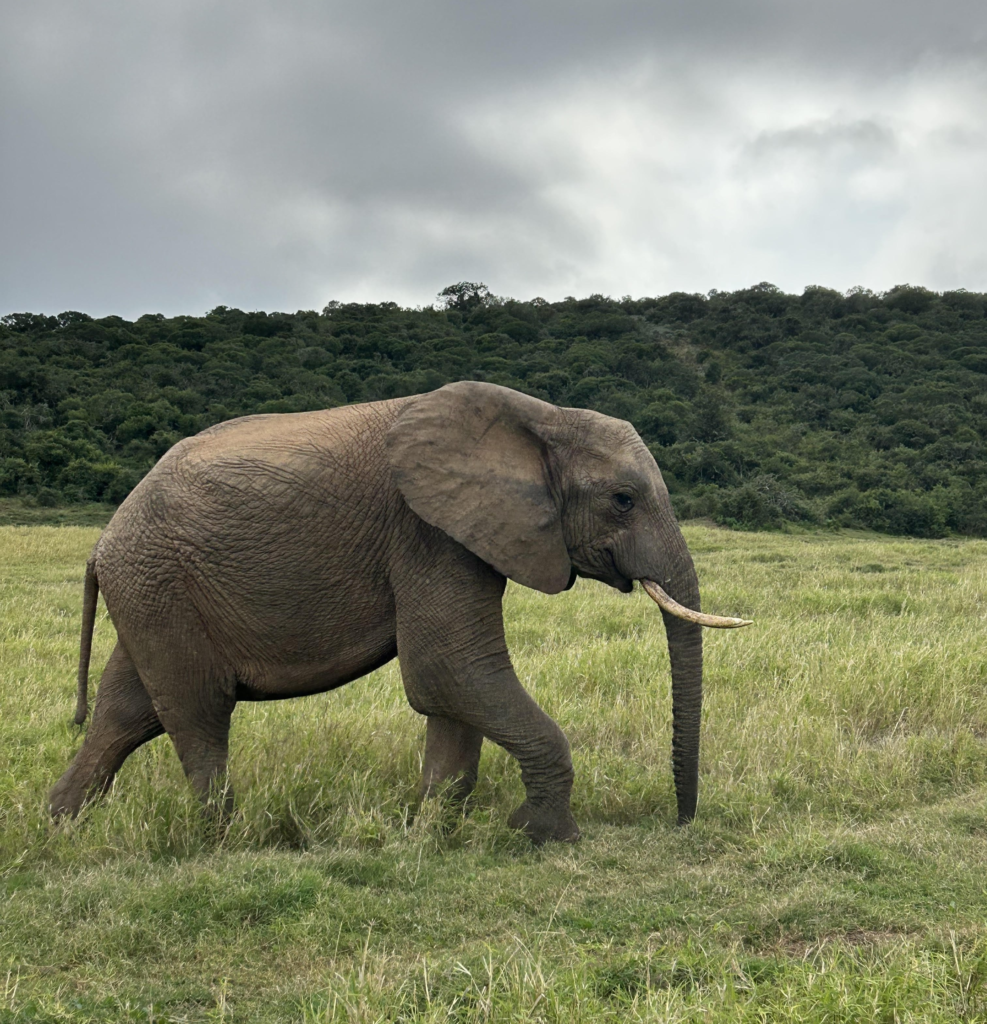
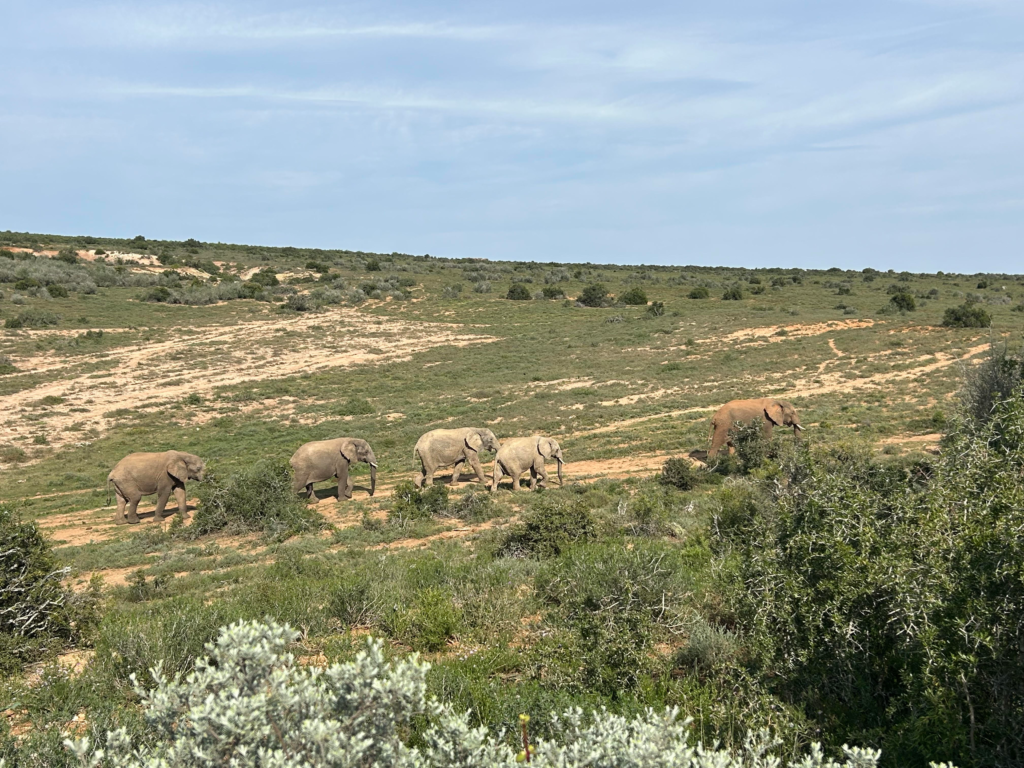
Elephants are the perfect animal to see on safari. Their enormous size makes them easy to spot, and they’re usually unbothered by vehicles. They’re active throughout the day and are so entertaining to watch. Whether its a stand-off between two males, a protective mother shielding her calf, or an entire herd splashing around at a watering hole. Elephants are fascinating animals.
I hope this guide has been helpful and you enjoy your visit to Addo Elephant National Park as much as I did!